
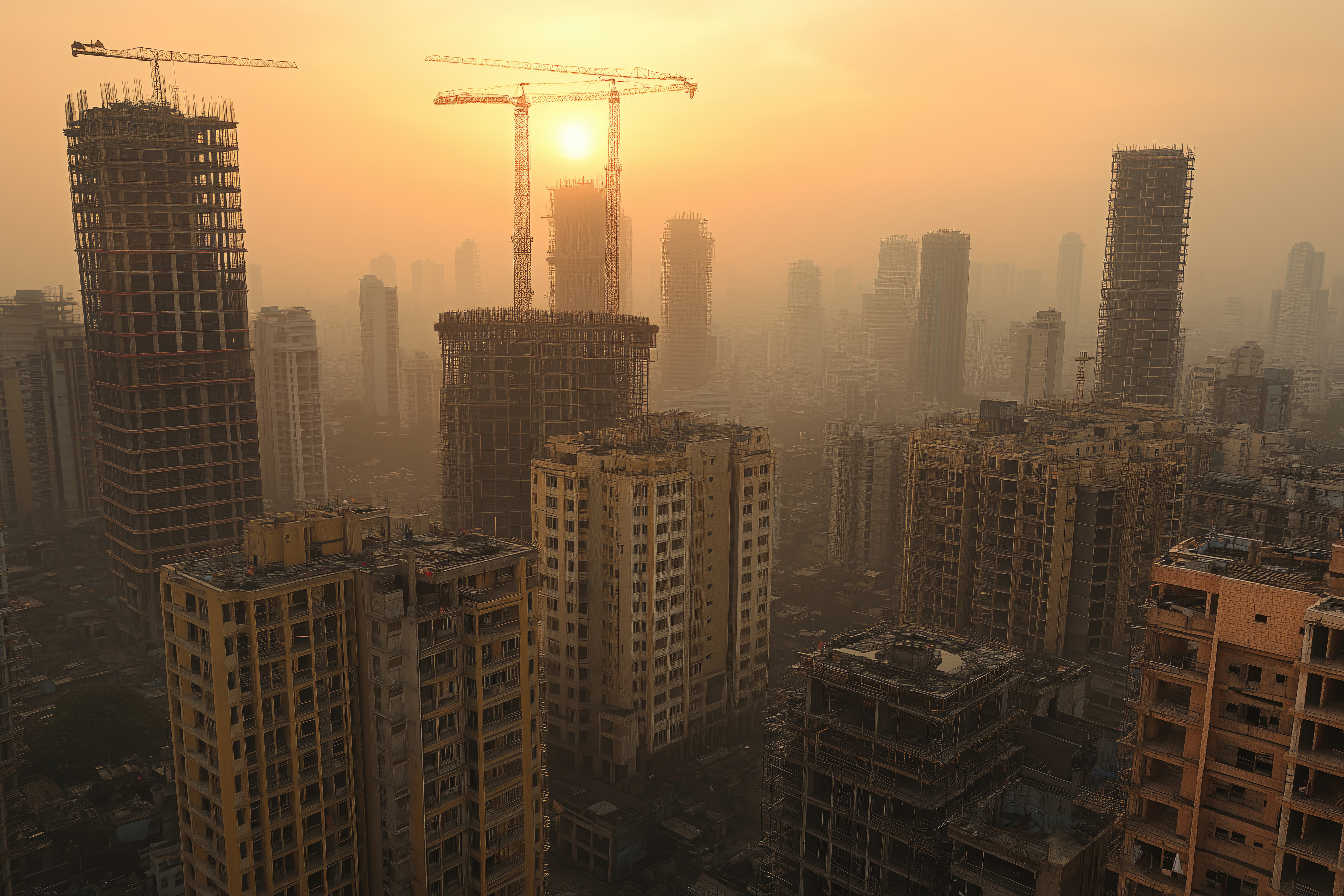
(image by freepik)
India often dazzles on the global stage with headlines about its growing economy, unicorn startups, and an increasing number of billionaires. In 2024, India became the world’s fifth-largest economy by nominal GDP, surpassing the UK. But beneath the surface of this impressive macroeconomic data lies a more complex question: Is India truly rich, or is it merely a land of concentrated wealth held by a select few? This article explores this conundrum by analyzing regional disparities, per capita growth rates, urban-rural divides, and the emerging North-South economic chasm.
The Billionaire Mirage:
India has witnessed an explosion in the number of billionaires. According to the Hurun Global Rich List 2024, India is now home to over 180 billionaires, ranking third globally behind the United States and China. Mukesh Ambani, Gautam Adani, and other industrialists regularly make headlines with their soaring net worths. Cities like Mumbai and Bengaluru have become the playgrounds of the ultra-rich, with luxury real estate, private jets, and billion-dollar valuations forming a dazzling facade.
However, this billionaire boom masks the broader reality. A 2023 Oxfam report highlighted that the top 1% of India’s population holds over 40% of the country’s total wealth. Meanwhile, the bottom 50% of Indians own just 3% of the wealth. This disparity raises the central question of whether India’s economic growth is inclusive or simply skewed.
Per Capita GDP: A More Grounded Metric
While India boasts a massive GDP, it ranks poorly in per capita terms. As of 2024, India’s per capita GDP stands at around $2,700, far below that of China ($12,000) or even Brazil ($9,000). This statistic reveals that while the aggregate economy is growing, individual prosperity for the average Indian remains limited.
This becomes starker when we compare per capita income across Indian states. For instance, in 2023-24:
- Goa had a per capita income of over ₹3.7 lakh
- Delhi stood at around ₹2.7 lakh
- Tamil Nadu and Kerala hovered around ₹1.9 lakh
- Uttar Pradesh, in contrast, lagged at around ₹70,000
- Bihar ranked at the bottom with just about ₹40,000
Such disparities point toward a serious geographic imbalance in wealth distribution.
The North-South Economic Divide:
One of the most pronounced patterns in India’s economic geography is the North-South divide. Southern states like Tamil Nadu, Karnataka, Telangana, and Kerala have consistently outperformed their northern counterparts in terms of per capita income, human development indicators, and infrastructure development.
Reasons for this divide include:
- Education: Southern states have historically invested more in education and literacy, leading to a more skilled workforce.
- Healthcare: Better healthcare systems have supported higher labor productivity.
- Urbanization: Cities like Bengaluru, Hyderabad, and Chennai have attracted tech and manufacturing industries.
- Policy Stability: Generally better governance and long-term policy frameworks.
In contrast, the northern states (except Delhi) struggle with poor infrastructure, lower education levels, high fertility rates, and complex political dynamics. States like Bihar, Jharkhand, and Uttar Pradesh have large populations but low economic output per capita, dragging down national averages.
City by City: Islands of Wealth in a Sea of Poverty
India’s cities are increasingly becoming isolated economic hubs, starkly different from the rural and semi-urban regions that surround them.
- Mumbai: India’s financial capital, home to most of its billionaires and the BSE/NSE, has an outsized impact on GDP.
- Bengaluru: The Silicon Valley of India, driving the tech sector and startup ecosystem.
- Hyderabad & Chennai: Manufacturing, IT, and pharma hubs.
- Delhi: A blend of government spending, services, and real estate wealth.
Yet, just a few kilometers outside these metros, vast poverty persists. Slums, poor infrastructure, and unemployment reveal that economic growth is often hyper-localized.
Rural India: Still Struggling
Despite urban growth, about 65% of India’s population still lives in rural areas. Agriculture, which employs over 40% of the population, contributes less than 20% to GDP. Rural wages have stagnated, and job creation outside agriculture remains a challenge. While schemes like MGNREGA have helped create temporary relief, sustainable rural development remains elusive.
Moreover, internal migration—especially from north Indian states to urban centers in the South and West—has created both opportunities and strains. Migrant workers often live in precarious conditions, with limited access to healthcare, housing, and social security.
Millionaire Metrics: The Middle is Missing
While India celebrates its billionaires, the middle class—often hailed as the backbone of any economy—is relatively small in India. According to the People Research on India’s Consumer Economy (PRICE), only about 20% of households can be considered “middle class” by global standards. This is in stark contrast to countries like China, where the middle class is estimated to be over 40% of the population.
India has around 800,000 millionaires (in USD terms), but this number is far greater due to most ill gotten gains not being reported – given its 1.4 billion population. Moreover, wealth concentration in family-owned businesses, real estate, and legacy assets means that new wealth creation remains limited to a small subset of industries and geographies.
India’s rich are rapidly expanding their assets whereas the middle class is struggling to grow. In a blog post recently, Nithin Kamath, the founder of Zerodha, mentioned that new account growth in 2025 has been muted.
What the Future Holds
India’s demographic dividend is often cited as a major advantage. With a median age of just 28, the country has the potential to drive global economic growth. But this advantage is contingent on the ability to provide education, jobs, and health to its young population. Without this, the demographic dividend could turn into a demographic disaster.
Additionally, growing inequality could have political, social, and economic consequences:
- Political Polarization: Rising wealth gaps may fuel identity politics and regional tensions.
- Social Unrest: Discontent over unequal access to opportunities may lead to protests, crime, and instability.
- Economic Drag: Inequality can limit aggregate demand, stifle innovation, and hurt long-term growth.
The real question is, can India create 200-300 million “new” jobs in the formal sector by 2047, and if it can – which sectors hold the potential for that kind of employment?
In a world that is rapidly increasing productivity through the use of new AI tools, society is changing far faster than any of can truly comprehend.
Bridging the Gap: The Path Ahead
For India to become truly rich—in a holistic, inclusive sense—it must undertake the following:
- Invest in Education and Skill Development: Especially in lagging states like UP and Bihar.
- Boost Healthcare Access: Universal health coverage can improve productivity and reduce poverty traps.
- Strengthen Infrastructure: Roads, digital access, and transport connectivity in rural India need urgent attention.
- Promote Decentralized Urbanization: Develop Tier-2 and Tier-3 cities to distribute economic growth more evenly.
- Progressive Taxation and Redistribution: Rational wealth and inheritance taxes, land reforms, and better-targeted subsidies.
- Foster Innovation Beyond Metros: Support for rural entrepreneurs, MSMEs, and localized value chains.
And finally, policy makers and industry, must start having debates and conversations around the introduction of a Universal Basic Income funded entirely through the productivity gains generated thanks to the AI revolution.
Conclusion: A Tale of Two Indias
India’s growth story is a paradox. It is at once a rising global power and a developing nation riddled with inequality. Billionaires thrive while millions survive on daily wages. Southern states boom while northern states crawl. Cities glitter while rural India grinds.
Whether India is truly rich depends on how one measures richness. If judged by GDP and billionaires, the answer is yes. But if judged by equitable access to opportunity, basic services, and human dignity, India has a long road ahead. The task now is not just to grow, but to grow together.
Leave a Reply